The gardens of the Rijksmuseum
18 August 2026
Free, unticketed and mostly missed: Cuypers' open-air museum of rescued gates and arches, a summer of sculpture, and coffee in an eighteenth-century pavilion.
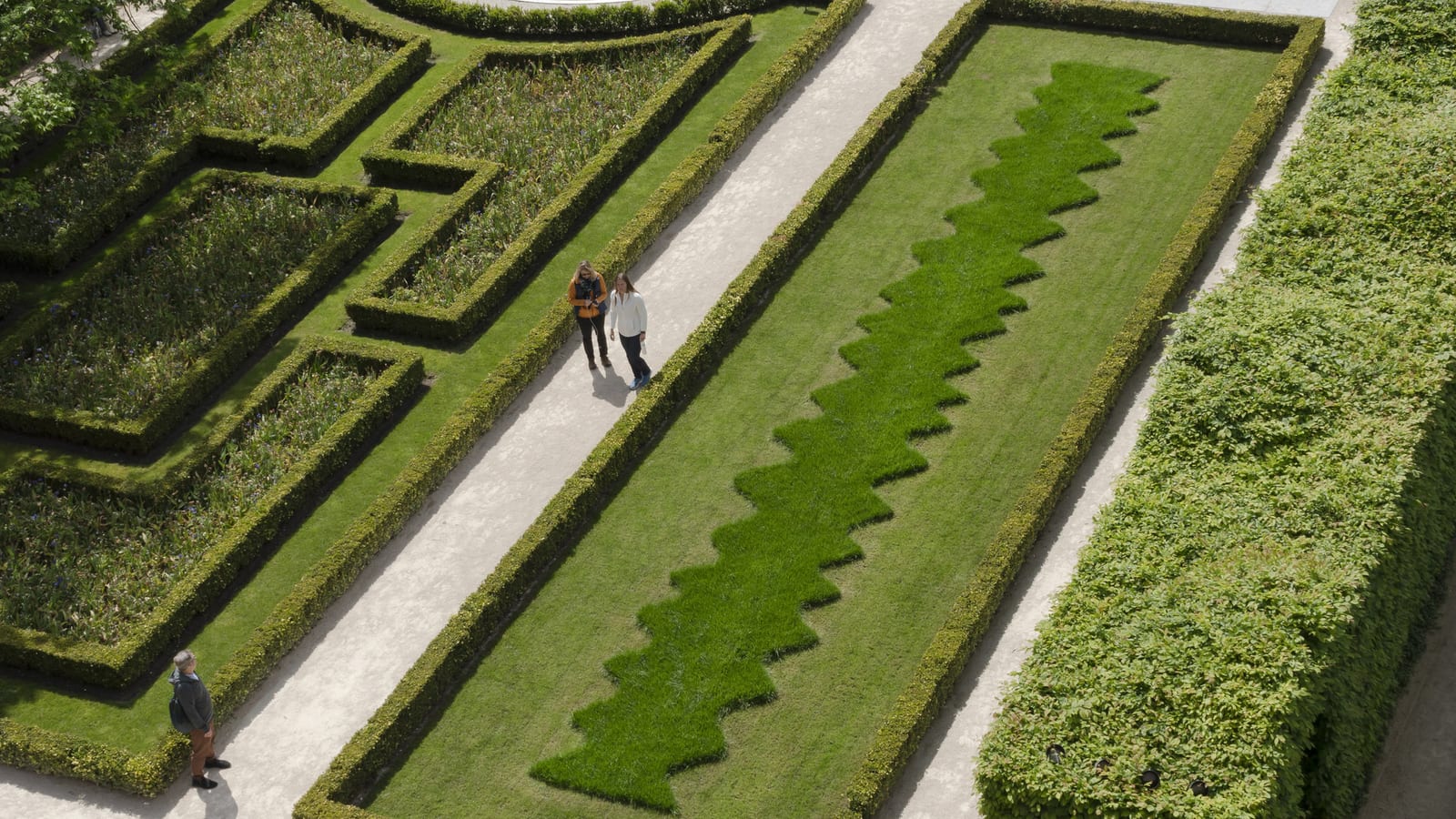
Almost everyone walks past them. The gardens wrap around the Rijksmuseum on three sides, they cost nothing, they need no ticket, and on a warm afternoon they are the best thing on Museumplein.
The building first
Pierre Cuypers finished the Rijksmuseum in 1885 and the country was not entirely pleased. It was a Catholic architect's building in a Protestant capital: brick, pinnacles, gilding, part cathedral and part castle, and the complaint at the time was that it looked like neither a museum nor Amsterdam. It has aged into the most recognisable building in the city. A ten-year renovation returned it in 2013 to something close to what Cuypers drew, after a century of partitions and false ceilings had got at it.
An outdoor museum
Cuypers laid out the gardens as well, and he had an idea about them that is easy to miss until you know to look for it. Through the nineteenth century the Netherlands was demolishing its own past at speed, and Cuypers collected the pieces. Gates, arches and doorways were carried here from buildings that no longer exist and set into the gardens as an open-air annexe to the collection indoors.
So the Berg gate stands here, brought from Deventer. Arches from the Kleine Kerk at Edam. A sandstone garden pavilion of 1735 by Ignatius van Logteren, moved from elsewhere in the city. These are not follies or reproductions. They are salvage, and the gardens are a rescue operation that happens to be beautiful.
The planting was restored between 2013 and 2015 by the landscape architects Copijn, working back towards Cuypers' own plan: some fourteen and a half thousand square metres of formal parterre, hedged rooms and water, thousands of plants and bulbs, and a Caucasian wingnut near the villa that has stood since the beginning.
The sculpture, and the coffee
Each summer the gardens are given over to one artist, and the list behind the programme is a serious one: Henry Moore, Calder, Miró, Dubuffet, Chillida, Louise Bourgeois, Ellsworth Kelly, Barbara Hepworth, Penone. Large work, outdoors, free, in a garden most visitors to the museum never walk into.
The eighteenth-century pavilion is not only a fragment either. In the warmer months it works as an espresso bar, which makes this the rare museum stop where the coffee is outdoors and the queue is not. What is open changes with the season, so check the museum's own pages before you go: the gardens, and the cafés and restaurant.
How to get there
Open daily from nine, free, and no booking, so this is a stop you can decide on at the door. Fifteen minutes on foot, and the walk is the pleasant part: west along Ceintuurbaan, right up Ferdinand Bolstraat, and over the Boerenwetering into the back of the square. On the tram it is tram 12 westbound from the Ceintuurbaan stop, three minutes from the hotel, and off at Museumplein. On a bike it is six or seven minutes and there is racking at the north end of the square.
The honest version of the Rijksmuseum gardens: go for an hour without a ticket, find the gate from Deventer, sit under the wingnut, and let the museum wait.